The best play of the year
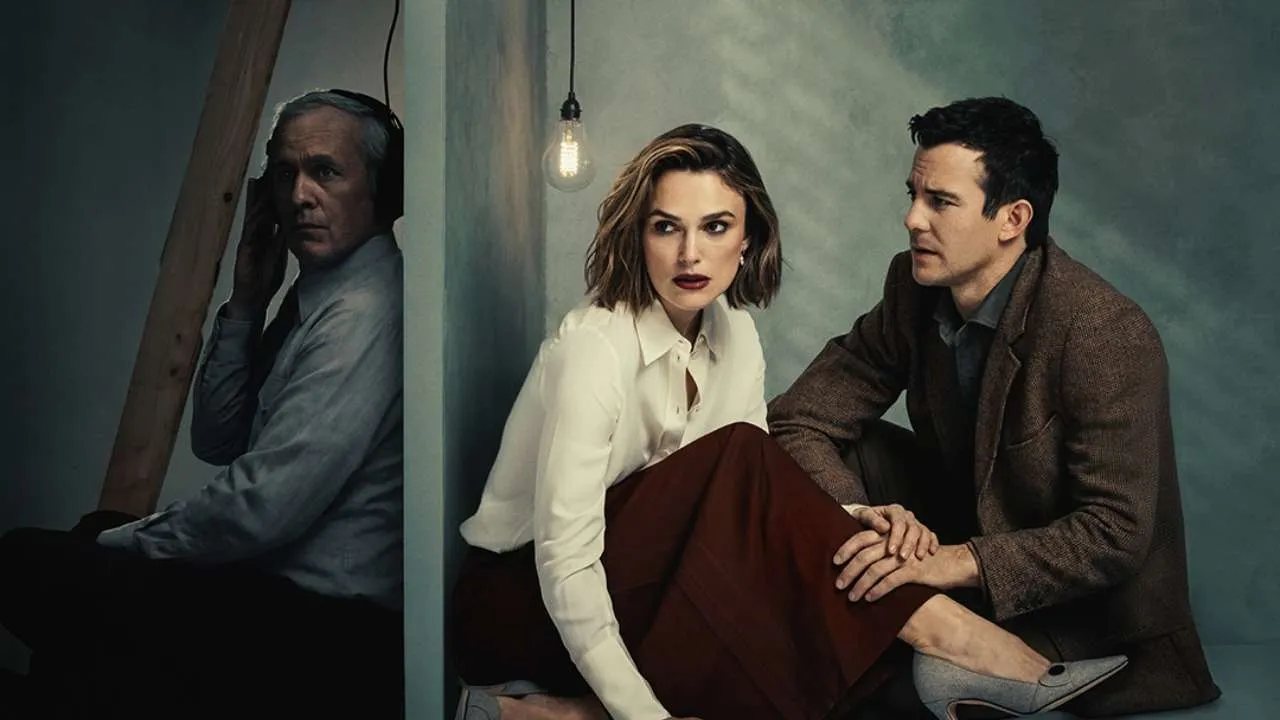
There was anticipation like no other in the queue for the Adelphi, snaking around the corner. An adaptation of an Oscar-winning film, a Hollywood star making her return to the stage, and Bridgerton's Luke Thompson. Add to that Robert Icke, one of Britain's most celebrated theatre directors, producer Sonia Friedman, and music by Max Richter, and expectations could scarcely have been higher.
So often, the anticipation overwhelms the production, and it simply cannot live up to the audience's expectations. Not here. We're in very safe hands indeed.
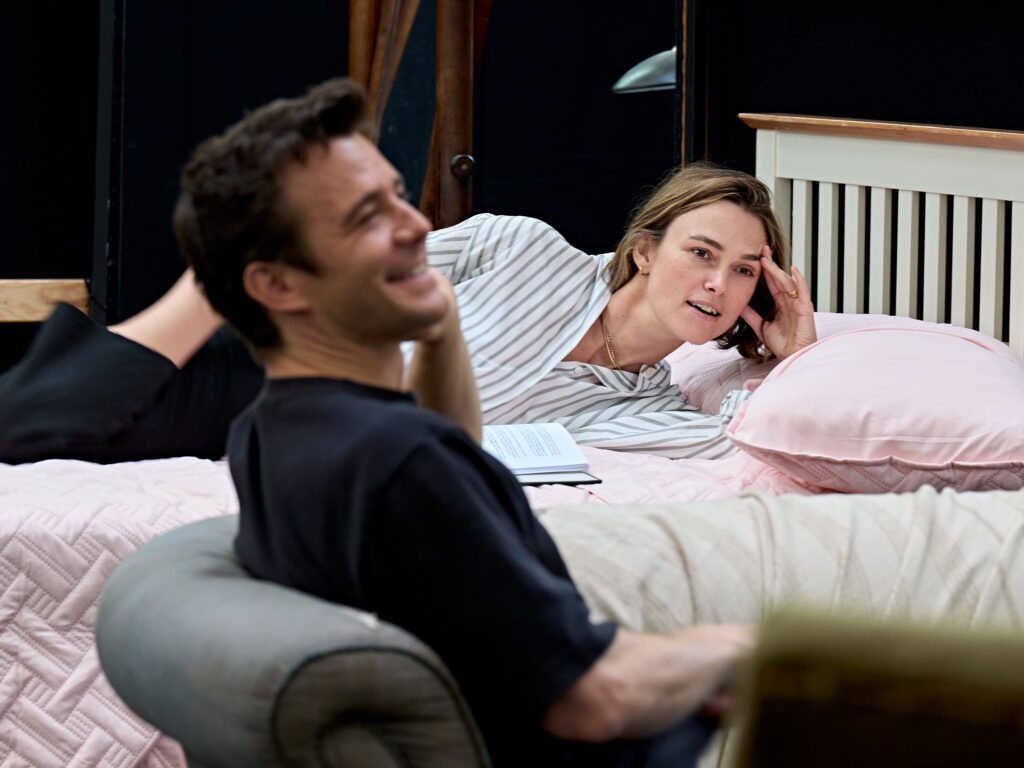
For those who've seen the original 2006 German film, you'll already know the merits of the story. Set in East Berlin in 1984, it follows a playwright and his actress partner as they fall under the surveillance of the Stasi, East Germany's notorious secret police. But what makes this adaptation so remarkable is not simply the strength of the material, it’s what Icke has managed to do with it.
From the very theatrical opening, the staging is sublime.
The revolving stage floor has something balletic about it, the characters dancing around each other, and the apparatus of the system. At the same time, they are constantly observable from every angle, like a perfectly imagined panopticon. The Stasi were inside their apartment, their relationships, and their thoughts.
Indeed, Gerd Wiesler, the Stasi captain assigned to oversee the operation, played with delicious menace by a pitch-perfect Stephen Dillane, essentially never leaves the stage. He stalks it with intent, patrolling from the outset, gliding between the other characters.
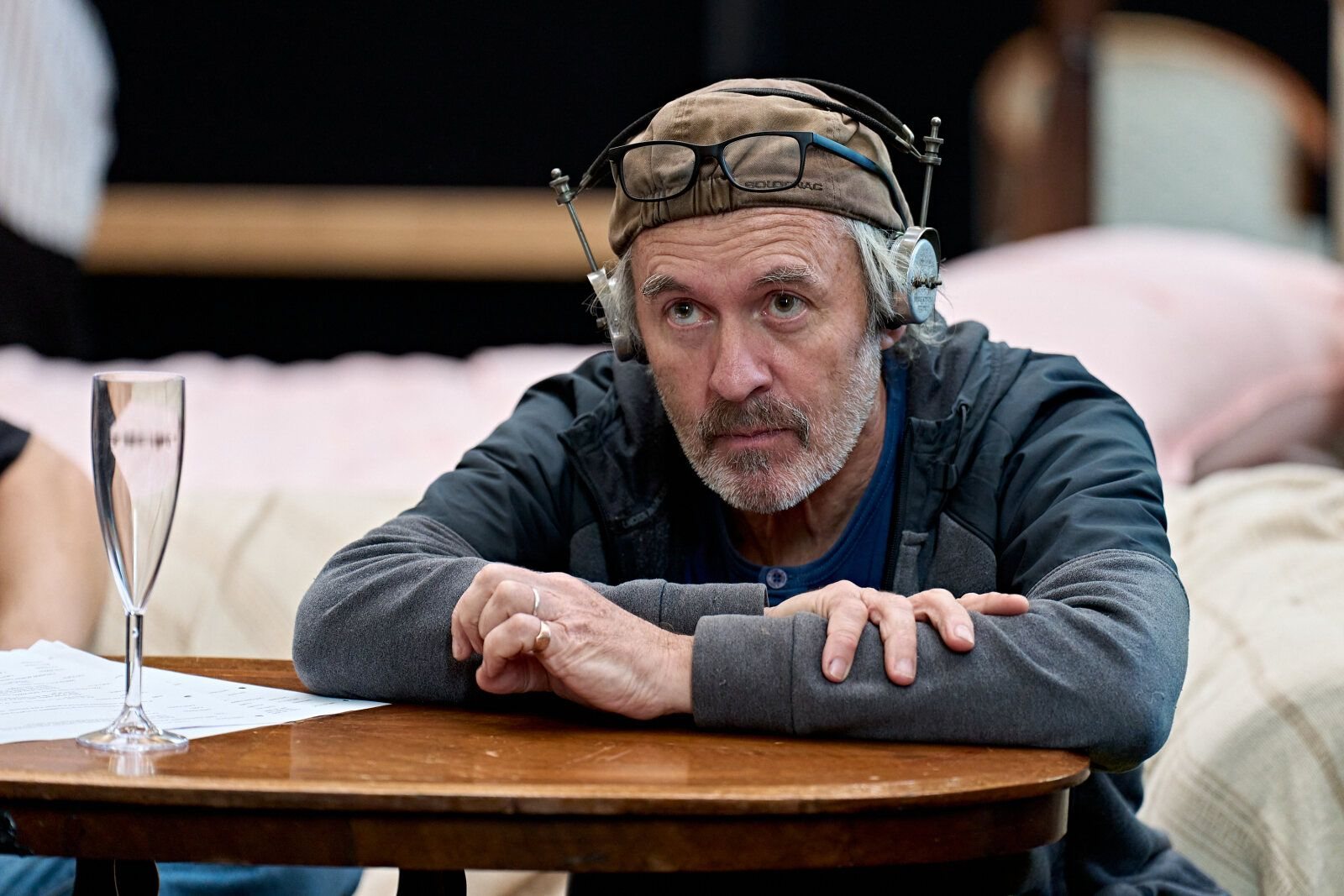
Wiesler moves from his listening post at the side of the stage to the centre of scenes in which, ostensibly, he has no part. It is the perfect illustration of how the state apparatus was at the same time everywhere and nowhere. Invisible, yet all-pervading.
It's this kind of detail, the ever-present security services, and the suffocation of hope that comes with that level of surveillance and control, that entirely justifies this translation to the stage of an already terrific film.
Almost the whole theatre is used to its full extent. Hildegard Bechtler's set, Jon Clark's lighting and Giles Thomas's sound design work together to give a sense of what that level of surveillance looks and feels like. The tapping of typewriters, the sounds of listening and recording, the sense that someone, somewhere, is always watching. Forever under observation, from the first minute to the last.
Then there is the use of multimedia, which can, in certain productions, feel very much like a bolt-on, but here is deployed to great effect throughout. Always adding, never detracting. Tal Yarden's video design gives us glimpses of life under the regime and, later, announces the fall of the Berlin Wall, carrying us through the upheavals of history towards the denouement of this particular story.
Richter’s music is similarly well judged. The piece that accompanies the Stasi's bugging of the apartment turns what might otherwise be a rather boring, silent operation into a thoroughly watchable piece of theatre, whilst his score throughout provides just the right level of tension and dramatic momentum.
Elsewhere, the unapologetic individualism of Cass Elliot’s Make Your Own Kind of Music offers a striking contrast with the impersonal brutality of the regime, whilst the lyrical melancholia beneath the upbeat sound of Bowie’s Sound and Vision makes it a particularly apt choice when it appears.
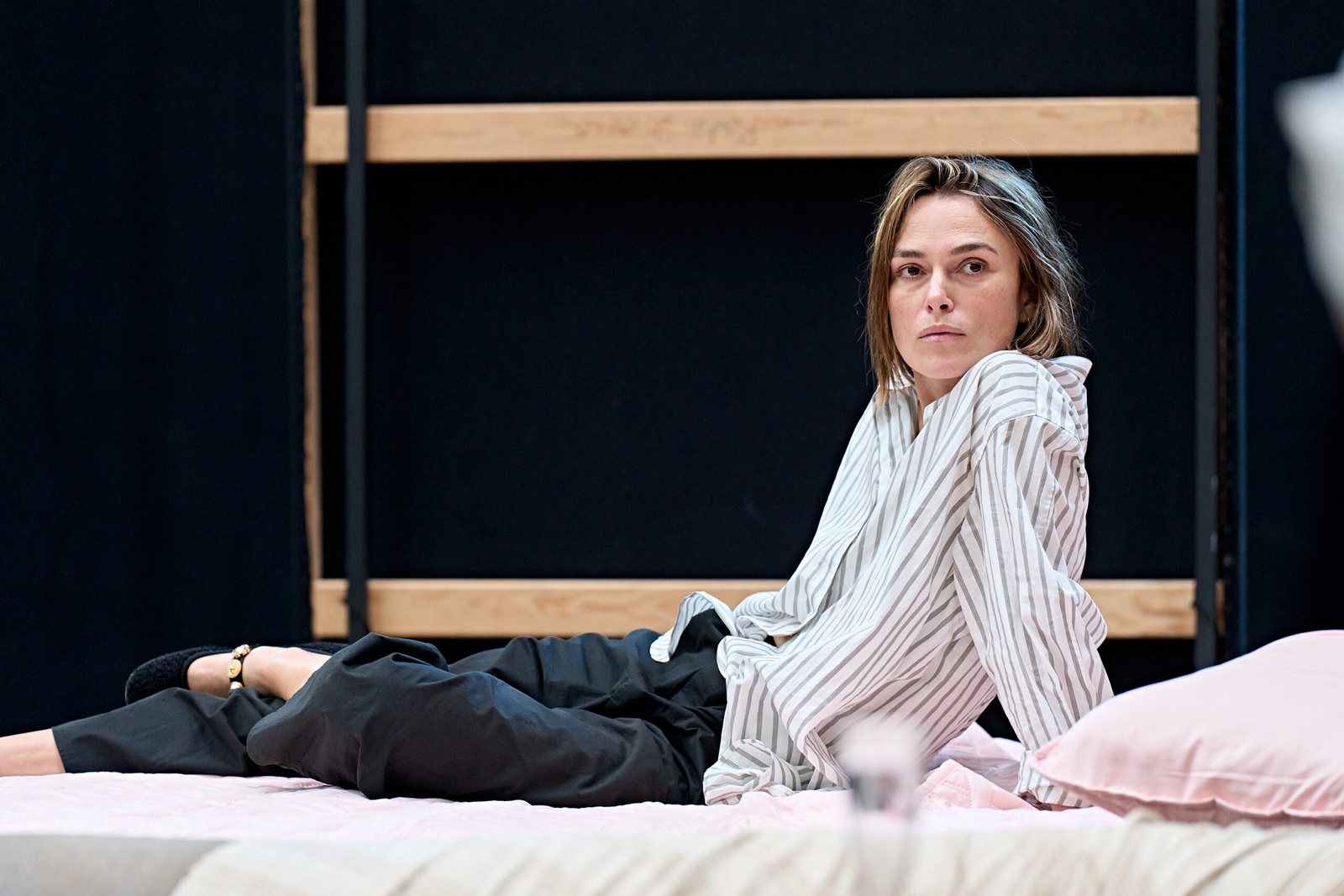
The central performances are no less impressive. When Keira Knightley, as Christa-Maria Sieland, first appears, it is at a party in the flat of her playwright partner, Georg Dreyman, played by Thompson. She is immediately captivating, reciting a passage from Dreyman’s work (“my watch has stopped, the battery must be dead”), a piece of theatre within the much greater performance that was everyday life in the German 'Democratic' Republic. But “what is the point of a play within a country of acting?”
It is a superb performance from Knightley, returning to the West End for the first time in 15 years. She delves into the depths of human emotion, from seemingly carefree confidence to vulnerability, desperation and beyond. She draws out the emotional turmoil of a life lived without control over one's own destiny, the confusion and the spiralling as the regime tightens its grip. “It was the nightingale, and not the lark.”
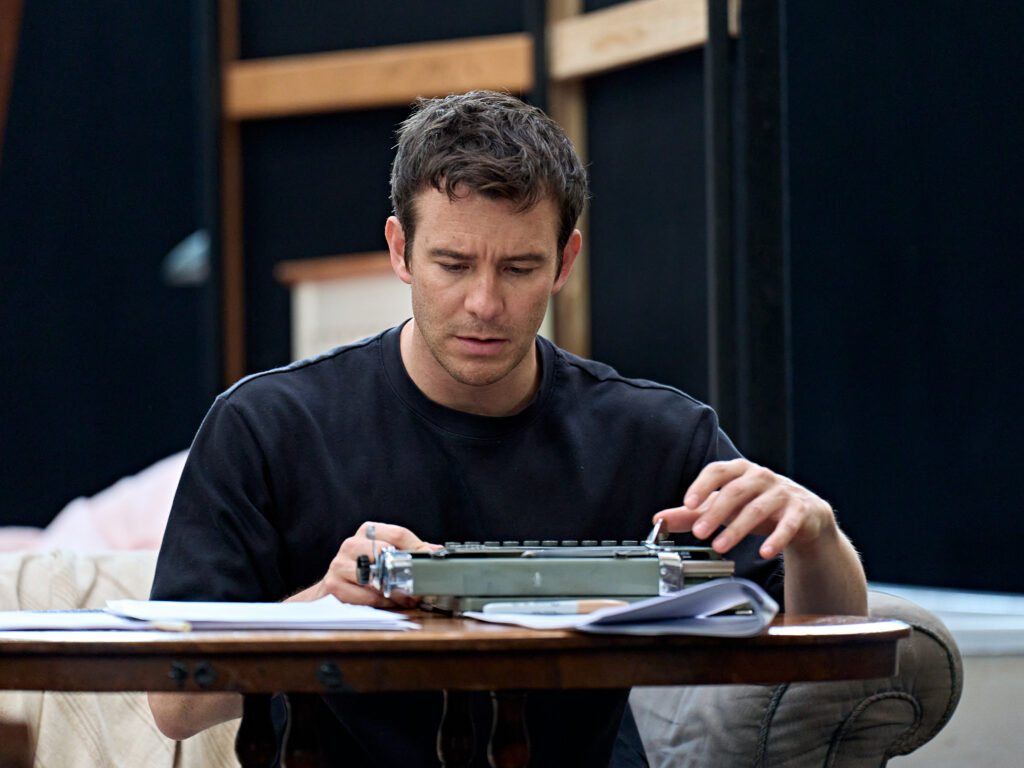
Opposite her, Thompson is excellent as Dreyman. Their chemistry is undoubted, and Thompson’s Dreyman epitomises the soul of the artist: intelligent, thoughtful, caring, trying to hold himself and his relationship together within the utterly unbearable confines of a dictatorial regime. His is perhaps the purest character of all: his sadness never turns to anger or revenge; his innocence is battered but not broken.
Dillane, meanwhile, is extraordinary. His Wiesler is initially a chilling embodiment of the state, a man whose professional existence consists of knowing everything about other people while revealing nothing of himself. Yet as he becomes increasingly entangled in the lives he observes, something begins to change. It is a performance of remarkable restraint, and all the more powerful for it.
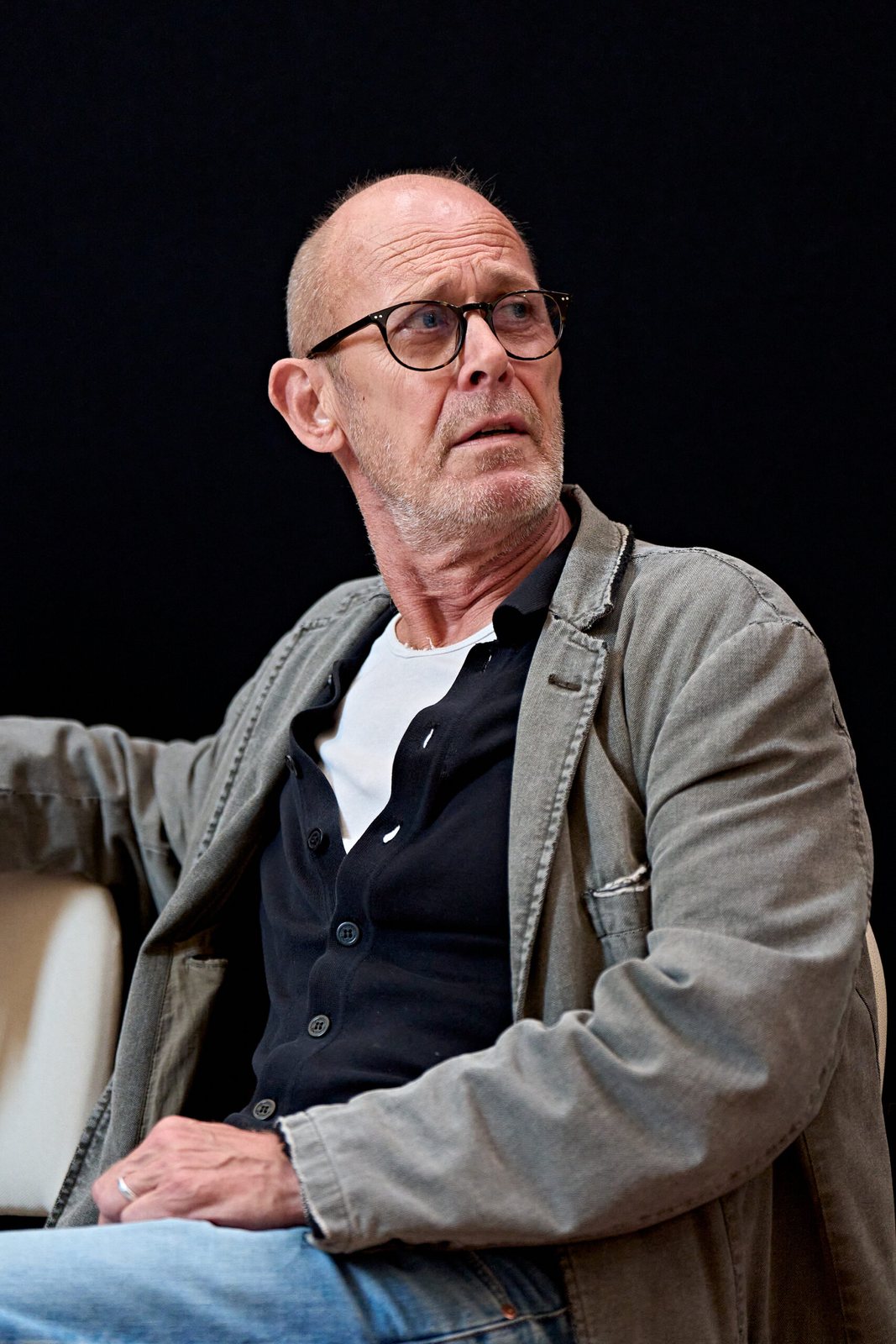
Not everyone, of course, is capable of such change. Bruno Hempf, played by Andrew Woodall, is a thoroughly reprehensible monster, a man whose position within the machinery of the regime allows him to exercise control over those who cannot resist him. Authoritarian regimes help the morally weak appear strong.
Yet he is no caricature. Woodall gives us the horrors of a very recognisable sort of man, someone who makes the most of his elevated position, with no redeeming features and no capacity for moral development. His devotion to the regime is ultimately shown to be nothing more than a devotion to power itself. Paul Higgins' excellent portrayal of Anton Grubitz, meanwhile, reminds us how readily ordinary ambition can become complicity. I was only doing my job.
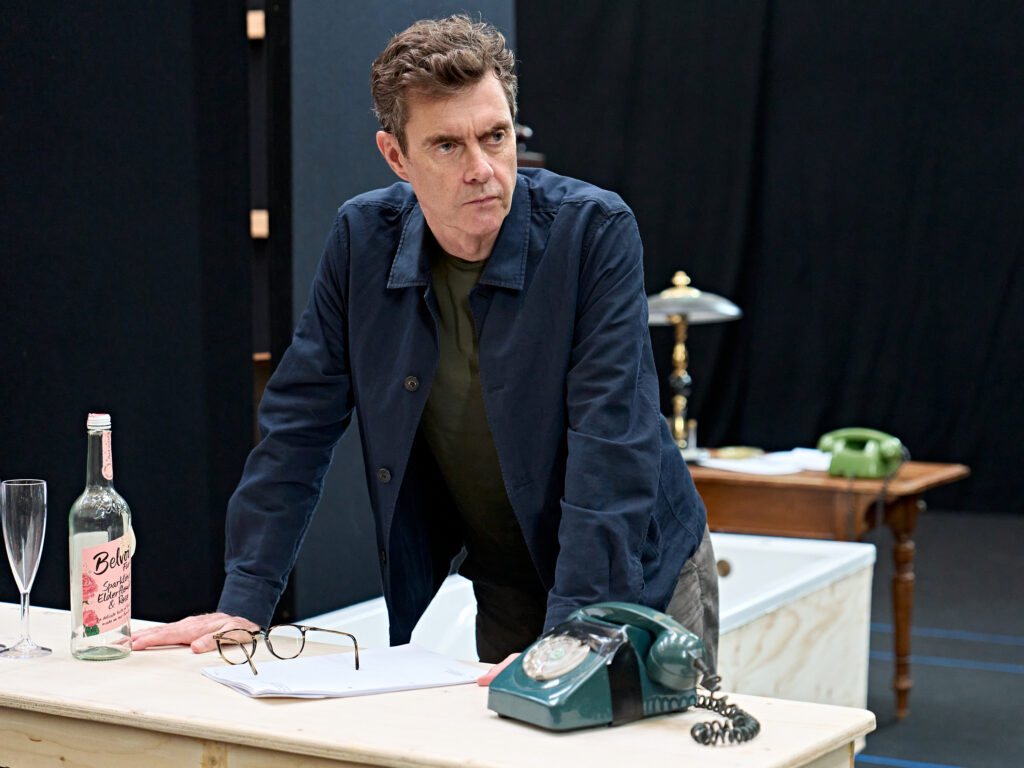
And it is here that the production reaches beyond the mechanics of surveillance to explore the moral quandaries faced by those living under such a regime. How does one get through it? How does one, possibly, live through it? With the compromises, the sacrifices, physical and mental, that survival might demand? At what point does acquiescence become complicity? And can we, should we, ever forgive those who have been a part of such a system?
There is the contrast between deceptions small and large – the minor, private ones, between partners (not to be able to tie a tie, say), and those of a far more troubling scale, borne out of a need to protect one’s life, and livelihood.
The arts, too, are central to the story. Early in the play, the director Albert Jerska, played by Nick Holder, bemoans the difficulties of staging plays as opposed to simply writing them. It's the first of a couple of almost in-jokes about theatre, as we sit watching a major West End production, but also a reinforcement of its very purpose.
Art and politics have always been intertwined, of course. But must they be? Should they be? What becomes of artistic expression when the state determines what may be said, performed or even thought? Can an artist survive the world they’ve made?
These are enormous questions, and The Lives of Others explores them without becoming a lecture. It is a production that is never so glib as to force any message down our throat, or to draw any unnecessary parallels with present-day concerns. Instead, it reminds us of the preciousness of the everyday freedoms that we take for granted in the West. The pages of history whisper to us.
If, as Stalin is reputed to have said, “poets are the engineers of the soul”, then this is a perfectly engineered evening of poetic, theatrical brilliance.
The Lives of Others is running at the Adelphi Theatre until 9th January 2027.